2019
Diploma Launch & PNB Project
Strengthening Peace Education
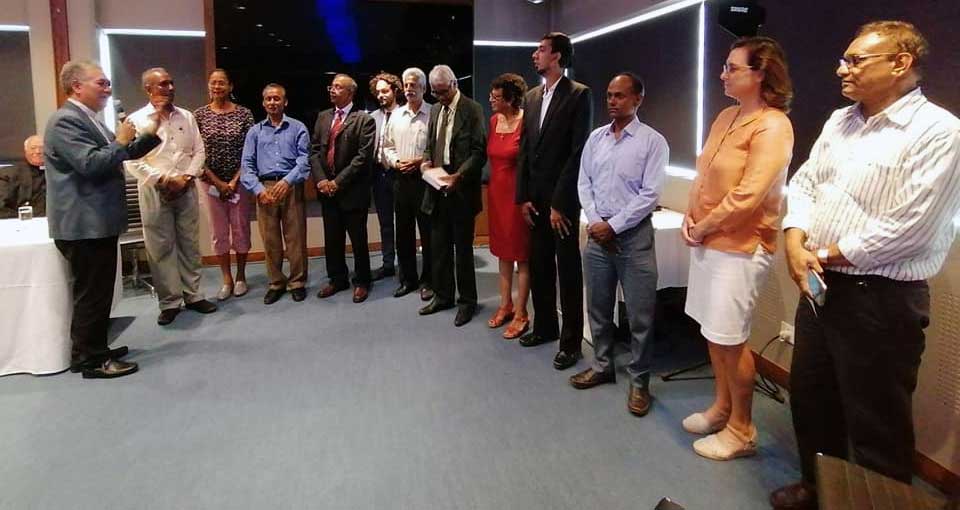
The University of Mauritius officially launched the first Diploma Course in ‘Peace and Interfaith Studies.’ Simultaneously, the "Peace and Nation Building" (PNB) project was introduced in partnership with NCSRF across three major colleges.
2018
Launching ICE in Schools
Expansion of Educational Projects
The Inter-Cultural Education project was launched in three schools: DAV Morcellement St André, Islamic College Port-Louis, and Loretto College Port-Louis. The Council also hosted an exchange for participants from Reunion Island.
2017
Alumni Study Trip to Reunion Island
Regional Engagement
Conducted the first Alumni Exchange Study Trip to Reunion Island, strengthening regional collaboration.
2016
Annual Conference & Reporting
Conferences & Institutional Growth
A landmark year featuring the "Inter-Religious Education" conference at MIE, the launch of the Council’s first Annual Report, and the start of the 3rd batch of Certificate students at the University of Mauritius.
2015
Life Skills Development
Launch of CSR Initiatives
The Council initiated its first CSR projects, focusing on life skills development for youth and women.
2012-2014
Certificate & Diploma Development
Expansion of Academic Initiatives
The programme expanded with:
- A Diploma in Peace and Interfaith Studies
- A second cohort of certificate students
2010-2011
Peace and Interfaith Studies
Academic Programme Launched
The first cohort of students enrolled in the Certificate Course in Peace and Interfaith Studies at the University of Mauritius.
Legal Registration & UNDP Partnership
The Council of Religions was formally registered under the Registration of Associations Act.
A partnership with UNDP was launched to implement an HIV Action Plan (2006–2009).
2005
Meeting with UN Secretary-General Kofi Annan
Engagement with the United Nations
Following a meeting with UN Secretary-General Kofi Annan, the Council strengthened its role in national development, particularly in addressing HIV/AIDS stigma and promoting social inclusion.
2001
World Religion Day (WRD)
Official Establishment of the Council of Religions
On World Religion Day, the Council of Religions (CoR) was officially established.
Representatives from the five major religions — Bahá’í, Buddhist, Christian, Hindu, and Muslim — united to promote peace and social harmony in Mauritius.
2000
The Birth of the Council
Global Inspiration from the United Nations
At the World Peace Summit at the United Nations, global religious leaders signed the Declaration for World Peace.
Inspired by this initiative, Mauritian religious leaders began forming a national interfaith body.
1996-1999
Continuation of the Mission
Presidential Advisory Council
Former President Cassam Uteem revived the initiative through the “President’s Advisory Council,” which operated from the State House and continued interfaith collaboration efforts.
1995
Dissolution of the Initial Committee
A Period of Transition
Following a change in government, the newly appointed Minister discontinued the committee’s activities.